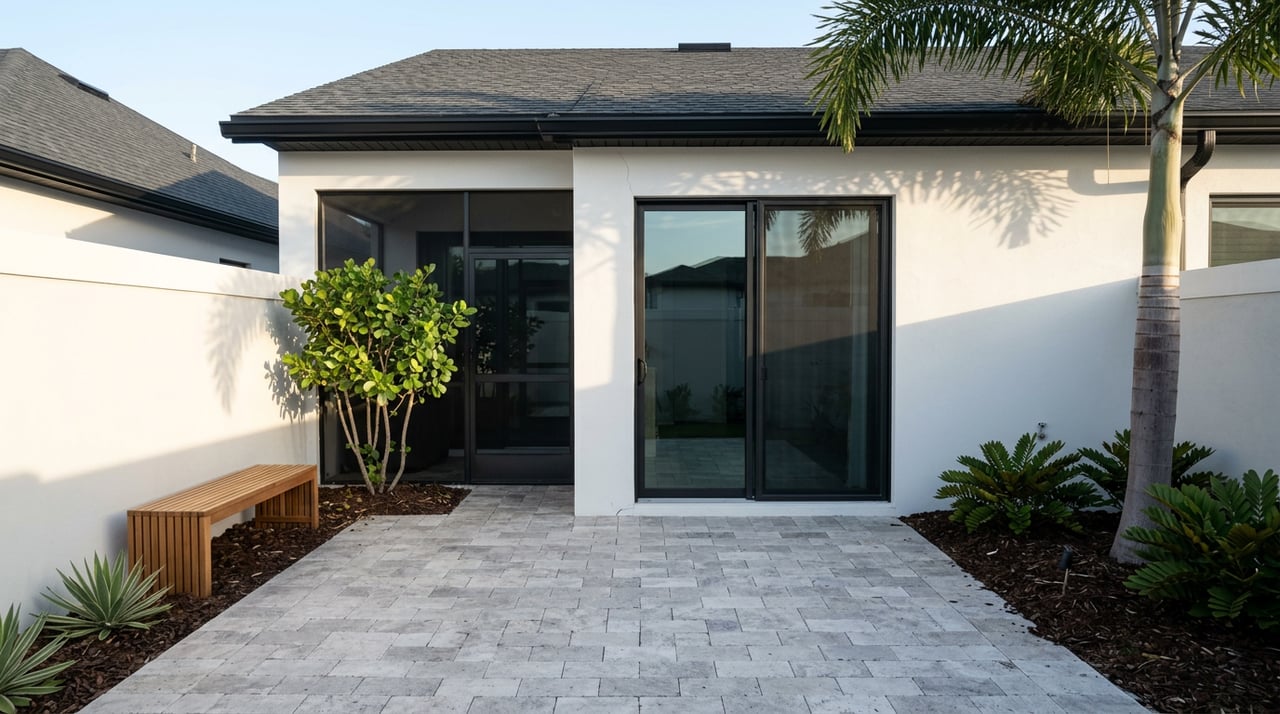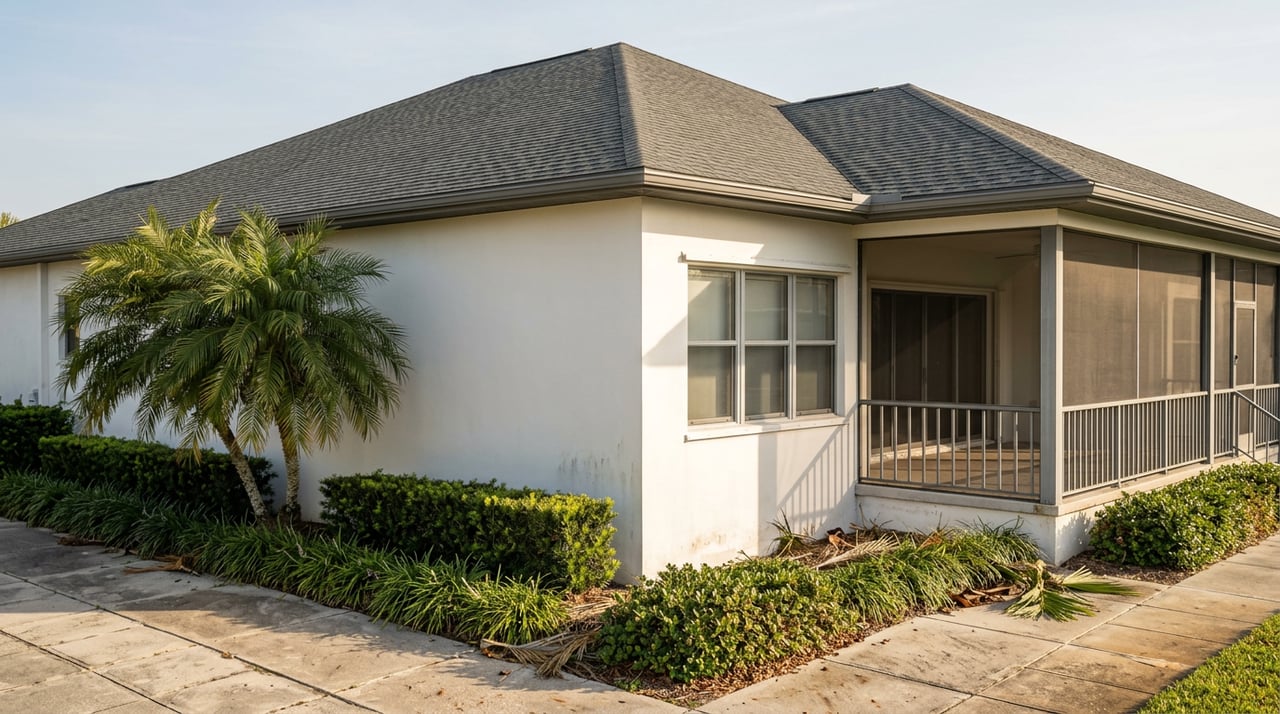
A homeowner in the Old School Square Historic Arts District replaced the siding on a contributing single-family home before asking anyone's permission. By the time the case reached Delray Beach's Historic Preservation Board as an after-the-fact application, the owner had brought in architect Roger Cope of Cope Architects to make the case. During the hearing, Cope floated an idea that probably sounded reasonable to his client: if the siding was the problem, why not just take the house off the historic register and be done with it.
Principal Planner Michelle Hoyland's answer is the part every buyer and seller in downtown Delray's historic districts should hear before they sign anything. Approving the siding application would not undo the historic designation. Removing a property from the register is a separate process tied to a citywide resurvey, on the city's schedule, not the owner's.
That exchange is the clearest window you'll get into how historic status actually functions here. It's easy to end up inside it, easy not to notice you're inside it until a renovation or a resale forces the question, and once you're in, there is no simple door back out.
The Footprint Is Bigger Than Most Buyers Assume
Downtown Delray's historic protections aren't limited to a few landmark blocks. The Old School Square Historic Arts District sits at the original geographic center of town and is the city's largest, with 176 structures, 101 of them already at least 50 years old. Del-Ida Park and Nassau Park were both locally designated in 1988. The Marina Historic District wraps around the City Marina with buildings dating mostly from the 1920s through the early 1940s. West Settlers, the site of Delray's first African American settlement established in 1894, was added to the Local Register in 1997.
The city's own standard for what counts as historic is a moving line, not a fixed one: a property qualifies if it's at least 50 years old and holds architectural or historical significance, according to the Historic Preservation Division's FAQ page. That threshold doesn't sit still. A house built in the mid-1970s crosses it this decade. Designation still requires a formal nomination and City Commission approval, so age alone doesn't flip a switch, but it does mean the pool of eligible properties keeps widening while a lot of buyers are still shopping with a mental map of "old" downtown that stopped updating years ago.
The Paperwork Follows the House, Not the Owner
Inside these districts, the city draws a clean line between what's yours to decide and what isn't. General maintenance and interior alterations are entirely at the property owner's discretion. Anything visible from the outside, from a paint color to a roofline, requires a Certificate of Appropriateness, reviewed either by city staff or by the full Historic Preservation Board depending on scope.
That's the mechanism that turned a siding job into a public hearing. It's also why the level of scrutiny can feel disproportionate to the size of the project. A 2021 case for a home at 108 North Swinton Avenue in the Old School Square district went through detailed review of dormer placement, a switch to Hardie-Board siding matched to the original wood texture, a new metal shingle roof, and the specific white trim color on the brackets, all for an addition to a Bungalow-style cottage. None of that was optional or discretionary. It was the price of building anything visible on a contributing structure.
A Certificate of Appropriateness attaches to the property, not the person who filed it. Whatever a previous owner did to the exterior, approved or not, becomes part of the file you inherit.
That's the detail sellers underestimate. If a past owner swapped windows, re-sided a wall, or changed a roof material without going through the COA process, that gap doesn't close when the house sells. It surfaces the next time anyone, staff or a future buyer's contractor, looks closely at what's actually on the house versus what's on file with the city.
There Isn't a Door Marked Exit
The de-listing question that came up in the siding case isn't a one-off. It's a natural thing for an owner to ask once they've felt the weight of the review process: if this is such a burden, why not just get out of it? The honest answer is that there's no owner-initiated off-ramp. Removing a property from the Local Register happens through a resurvey the city undertakes on its own timeline, not through a favorable outcome on an unrelated permit.
That asymmetry matters for anyone weighing whether a contributing home is worth the tradeoff. You can win every Certificate of Appropriateness you ever file and still be exactly as bound by the district's rules on your last day of ownership as you were on your first.
A Board's "No" Isn't the Final Word
The process does have real flexibility built in, just not where most people look for it. In 2024, the City Commission overruled a Historic Preservation Board denial and approved a Certificate of Appropriateness, along with a waiver and variances, for construction of a two-story duplex under Resolution 52-24. The board said no. The elected Commission said yes.
That case is worth knowing before a project gets denied, because a denial at the board level isn't automatically the end of the road. It is, however, a longer and more public process to escalate, so it changes the timeline and the visibility of a project rather than removing the obstacle outright.
The Incentive Side Most Listings Never Mention
None of this is framed by the city as pure restriction. Delray Beach offers a Historic Property Ad Valorem Tax Exemption for qualifying improvements to historic properties, and federal Historic Tax Credits can provide up to a 20 percent credit for rehabilitation of historic properties that are non-owner-occupied and sit within a Nationally Listed Historic District. For an investor eyeing a rental property in Del-Ida Park or a small income property near the Marina Historic District, that credit can offset a meaningful share of a rehab budget that a buyer of a non-historic property simply doesn't have access to.
What to Actually Check Before You Write an Offer or List Your Home
- Confirm the district and the contributing status directly with the city's Historic Preservation Division rather than relying on what the listing sheet says. Status isn't always flagged clearly at the point of sale.
- Ask for the property's full Certificate of Appropriateness history, not just anything from the current owner's tenure. Unresolved exterior work from a prior owner is now the house's problem, not theirs.
- Before budgeting any exterior project, from a new roof to a color change, plan for COA review of materials, proportion, and color, not just building code compliance.
- If a project is denied at the board level, know that an appeal to the City Commission exists as an option, understanding it adds time and a more public hearing.
- If you're planning a substantial rehab, especially on a non-owner-occupied property, ask whether the local ad valorem exemption or the federal 20 percent credit applies before you finalize the budget.
A Few Questions Worth Settling Early
Does a historic designation mean I can't change anything on the inside? No. The city leaves general maintenance and interior alterations to the owner's discretion. The review process is triggered by exterior work.
How old does a house need to be before it's considered historic? The city's standard is at least 50 years old with demonstrated significance, though formal designation still requires nomination and City Commission approval rather than happening automatically.
Can I just paint my house whatever color I want? Not in a historic district. Exterior color changes require a Certificate of Appropriateness along with a Building Materials and Color Sample Form.
What happens if the Historic Preservation Board says no to my project? A denial can be appealed to the City Commission, which has overturned a board denial before, as it did in the 2024 duplex case under Resolution 52-24.
Buying or selling inside one of downtown Delray's historic districts isn't a reason to walk away from a beautiful old cottage on Swinton Avenue or a block near Banker's Row. It's a reason to ask sharper questions before the offer goes in, and to have someone in your corner who already knows which questions those are. If you're weighing a contributing property in Downtown Delray Beach, Michelle Yales can walk through the property's specific file with you and help you figure out what you're actually taking on. Schedule a free consultation to start that conversation before you fall in love with a house whose paperwork you haven't seen yet.