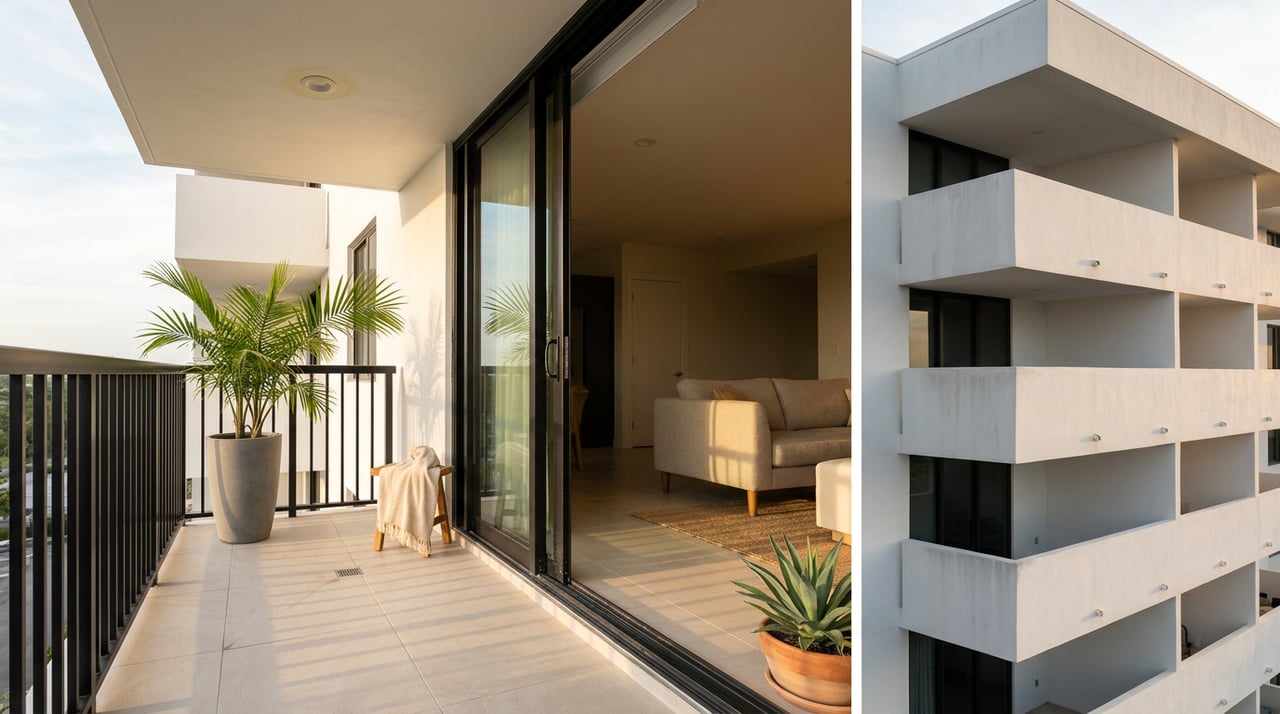
Picture two condos in downtown Boca Raton, listed this year at nearly the same price per square foot. One buyer closes on schedule with a conventional thirty-year mortgage. The other's financing falls through, twice, and the deal only survives because the buyer switches to an all-cash offer, because no conventional lender will touch the building.
Same price. Same city. Completely different deal.
That gap is the story of Boca Raton real estate right now, and it is not one the median sale price can tell you. According to Redfin's data for the three months ending in May 2026, Boca Raton's median sale price was $831,000, down slightly from the same period a year earlier. That single number is doing a lot of hiding. It blends brand-new towers with pre-sold units and clean financing against thirty-year-old buildings that are one failed inspection away from a six-figure special assessment. Ask a buyer's agent which of those two markets a specific listing belongs to, and the honest answer is: it depends on paperwork you haven't seen yet.
New Towers Are Pulling Demand Toward the Front of the Line
Boca Raton hasn't seen a wave of branded residential development like this in over a decade, and three projects explain why buyer attention has shifted toward new construction.
Mr. C Residences Boca Raton, developed by Key International and Wexford Real Estate Investors with the Cipriani hospitality family attached, is bringing 133 residences to 41 SE 4th Street, priced from $1.7 million, with sales originally slated to open this past spring at a gallery on SE 3rd Street. It is the first newly announced branded residential tower downtown in more than a decade, and Douglas Elliman Development Marketing is handling sales.
A few blocks away, Glass House Boca Raton has already sold more than a third of its 28 units, with prices running $2.7 million to $8 million. The developer locked in a $70 million construction loan in March 2026 to move into vertical construction, targeting a 2027 completion.
And this spring, the Boca Raton City Council voted unanimously to approve a 76-unit luxury condominium on the grounds of the Boca Raton Resort, an eight-story building with two- to five-bedroom layouts rising on what is currently a golf course maintenance yard.
None of these buildings exist yet in finished form. But the sales activity around them is real, and it is pulling qualified buyers, and their financing, toward projects that will open with clean reserve studies, current insurance, and no deferred maintenance. That's the pull side of the split.
Older Buildings Are Absorbing the Bill for the Last Decade
The push side is less flattering. Florida's post-Surfside reforms, SB 4-D in 2022 and its follow-up SB 154 in 2023, require condo and co-op buildings three stories or taller to complete a Structural Integrity Reserve Study and pass a milestone structural inspection. Buildings within three miles of the coast face that inspection at 25 years old. Everywhere else, it's 30. Boards can no longer vote to underfund or skip reserves once those deadlines pass, which means decades of artificially low HOA dues are now catching up in the form of assessments that commonly run $10,000 to well over $100,000 per unit, depending on what the inspection finds.
For a lot of these buildings, the milestone deadline lands by December 31, 2026. That is four and a half months from now.
The price effect shows up unevenly. Waterfront and newer buildings have largely absorbed the compliance cost without much damage to value. Older, non-waterfront condos have not been so lucky. Units in buildings built before 1990 have seen prices fall more than 20 percent in some cases, concentrated where reserves were thin and the inspection surfaced real work.
That's a wide enough gap that "the condo market" stops being a useful phrase. It's really two markets sharing a zip code.
The Part Most Buyers Don't See Coming: Your Lender Might Say No
Here is where the friction actually bites, and it is the part a lot of buyers don't find out until they're already under contract.
On March 18, 2026, Fannie Mae and Freddie Mac issued coordinated rule changes that tightened condo financing standards across the board. The minimum reserve funding requirement is moving from 10 percent to 15 percent of a building's annual assessment income, a threshold that is phasing in over the following months. The 50 percent investor-ownership cap that used to sink a lot of rental-heavy buildings was retired the same day, which helps some projects. But the insurance rules got stricter: master policies with a per-unit deductible above $50,000 make a building non-warrantable for any loan application dated July 1, 2026 or later. And the faster, lighter-touch Limited Review path, which some smaller loans used to skip a full documentation review, was eliminated entirely as of August 3, 2026, just two weeks ago.
Put plainly: a building can be structurally fine and still fail financing review on reserves or insurance alone. When that happens, the whole project goes non-warrantable, not just one unit. Every owner in the building feels it at resale, whether they knew about the problem or not.
A condo's asking price only means what a lender is willing to finance. Everything else is a number on a listing sheet.
This is why the "cheaper" unit in an older building isn't automatically a better deal. If the building can't clear a full underwriting review, your buyer pool shrinks to cash and non-QM lenders, who typically charge a quarter to a full point more and want 20 to 25 percent down. That discount you thought you were getting can disappear the moment you try to finance it, and it will disappear again for whoever eventually buys from you.
What This Actually Means If You're Shopping in Boca Right Now
If you're comparing two Boca Raton condos at similar price points, the square footage and the finishes are the least important variables. Before you write an offer, ask for:
- The building's completed Structural Integrity Reserve Study, or confirmation of when it's scheduled
- The date of the last milestone inspection, or the deadline if it hasn't happened yet
- The current HOA budget, specifically the percentage allocated to reserves
- The master insurance declarations page, including the per-unit deductible
- Board meeting minutes from the last twelve to eighteen months, looking for any mention of pending or proposed assessments
If a seller or listing agent can't produce these documents quickly, that's information too. Florida law gives buyers the right to request the association's governing and financial documents, and the right to cancel a contract if they aren't provided within a set window.
For sellers holding a unit in an older building, the instinct to price low to move it faster often backfires. A buyer's lender is going to ask the same five questions regardless of your asking price. Getting ahead of a reserve study, addressing an insurance gap, or simply having clean documentation ready can matter more to your final sale price than a few thousand dollars off the list.
A Few Questions Worth Settling Before You Look at Listings
Does a non-warrantable building mean I can't buy the unit at all? No. It means conventional financing through Fannie Mae or Freddie Mac isn't available. FHA and VA loans run their own separate approval processes, and non-QM or portfolio lenders will still finance the purchase, typically at a higher rate and with a larger down payment required.
If I'm paying cash, does any of this matter to me? It matters at resale. A cash buyer today becomes a seller eventually, and a non-warrantable building shrinks the pool of people who can buy from you to other cash buyers and non-QM borrowers. That tends to show up as a longer time on market and a lower ceiling on price.
Is this only a problem for buildings from the 1970s and 80s? Age matters, but it's not the only factor. A newer building with thin reserves or a high insurance deductible can also fail a full review under the current rules. The building's paperwork tells you more than its construction date does.
Boca Raton's condo market rewards buyers and sellers who ask about the building before they fall for the unit. If you're weighing a listing here and want a straight read on where a specific building stands on reserves, inspections, and financing eligibility, Michelle Yales can walk through it with you. Schedule a free consultation before you write an offer, not after.