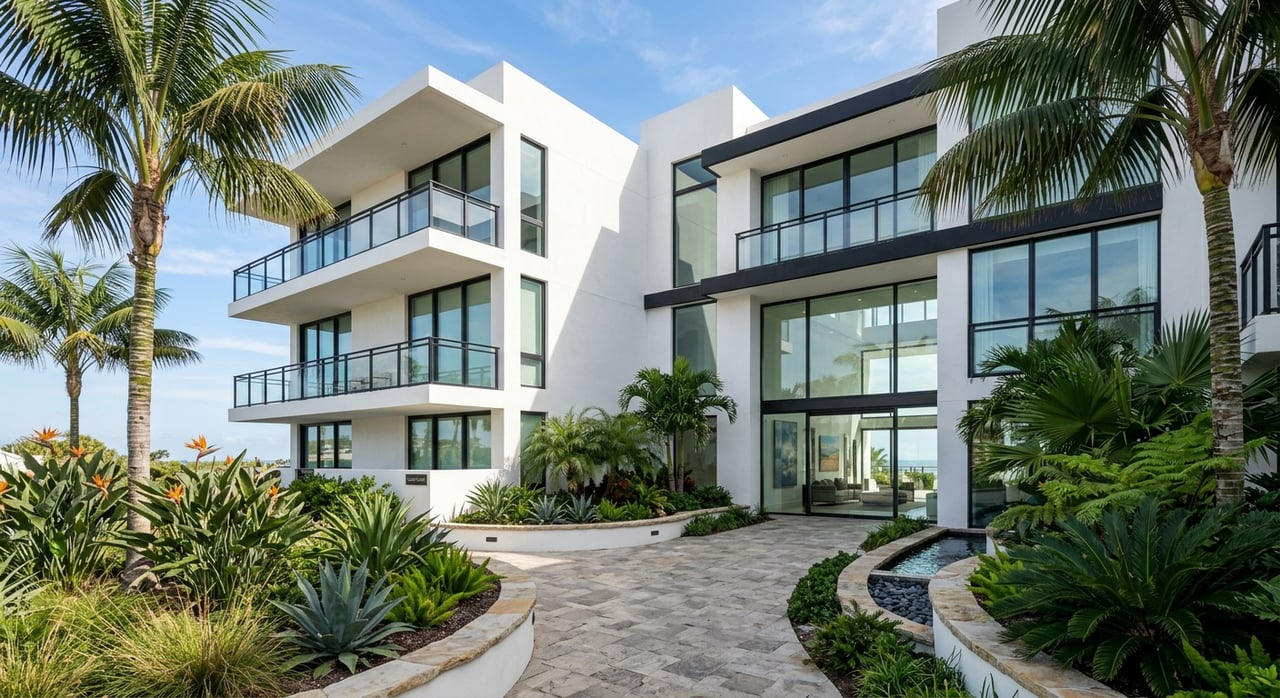
In May 2024, Eugene and Debbie Friedlander signed a contract to buy a $3.65 million condominium at Toscana, the gated oceanfront community on Highland Beach's stretch of A1A between Boca Raton and Delray Beach. The seller, Mark Kaplan, signed the standard Condominium Rider stating he was not aware of any special assessment discussed by the association board in the prior twelve months. That October, months after closing, the Friedlanders received a notice: $91,595 due for an elevator replacement project. Court filings allege the board had already priced the project at between $5 million and $7 million and had it on the agenda for a late February meeting, months before the sale closed. The Friedlanders sued, and BocaNewsNow reported on the case in October 2025.
Most coverage of that lawsuit treats it as a disclosure story. It is one. But it also punctures a piece of conventional wisdom that Highland Beach buyers lean on more than they realize: the idea that a tower built after 2000 is meaningfully insulated from the reserve-funding reckoning everyone associates with the town's older buildings. Toscana's three towers finished construction between 2000 and 2004. By Highland Beach standards, that makes it one of the newer full-service addresses in town. The elevators at issue were, according to the board's own filings, already over 20 years old and facing obsolete replacement parts. A building doesn't get a pass on aging mechanical systems just because it was built in this century instead of the last one.
Every full-service tower in town is roughly the same age
Look at what actually stands along Highland Beach's three miles of coastline. Seagate of Highland went up in 1970 with 317 units. Aberdeen Arms followed in 1972. 45 Ocean, originally Ambassador South, finished in the mid-1970s as two ten-story towers. Coronado came next, built in two phases between 1982 and 1984 across 336 units. Highlands Place opened in 1988. Highland Beach Club arrived in the late 1990s. Toscana closed out the run in 2004.
That's a 34-year construction window for essentially every major condominium address currently for sale in Highland Beach, and it ended over two decades ago. There is no meaningful newer cohort to point a cautious buyer toward. The town simply stopped building full-service oceanfront and Intracoastal towers after Toscana, which means the building most buyers would call "the young one" is now 22 to 26 years old, sitting inside the same 25-year coastal milestone-inspection window that governs its 1970s neighbors.
That compression matters more than it sounds. In most Florida coastal markets, a buyer can shop by age and expect a rough correlation with assessment risk: older buildings, more exposure; newer buildings, more runway. In Highland Beach, that runway has largely run out for the entire inventory at once.
Why the bill is landing now instead of gradually
The Toscana assessment wasn't triggered by a failed milestone inspection. Elevators aren't one of the eight structural components that Florida's Structural Integrity Reserve Study law explicitly names, which are the roof, load-bearing walls, fire protection systems, plumbing, electrical, waterproofing, windows and exterior doors, and any other item with a deferred maintenance or replacement cost above the statutory threshold. But the environment that produced this assessment is the same one reshaping how every Highland Beach board thinks about big capital items, structural or not.
Since the 2021 Champlain Towers South collapse in Surfside, Florida has passed three rounds of legislation aimed at closing the gap between what condo associations charge in dues and what their buildings actually need in reserves: SB 4-D in 2022, SB 154 in 2023, and HB 913 in 2025. The practical effect for the eight mandated components is that associations can no longer vote to waive or underfund reserves for budgets adopted after December 31, 2024, and full funding under a building's Structural Integrity Reserve Study had to begin by January 1, 2026. For decades, boards could paper over a shortfall with a member vote to skip a reserve contribution for another year. That option is gone for the categories the law covers, and it has changed the appetite boards have for deferring anything expensive, including a 20-year-old elevator bank nobody wants to be the one still running when it finally fails.
That's the mechanism worth understanding before you write an offer in this town. It isn't that Highland Beach condos are suddenly less safe. It's that the accounting has become less forgiving everywhere, all at once, in a market where every building is old enough for the accounting to matter.
What would have caught the Toscana assessment before closing
The Friedlanders' case turned on a documented failure: the board minutes existed, the assessment was on the agenda, and the seller's own contract representation was false. A buyer's real estate attorney or agent reviewing the right documents inside a standard inspection period would have found the same paper trail before the contract went hard. In practice, that means requesting, in writing, before any contingency is waived:
- The most recent Structural Integrity Reserve Study, including the funding schedule for the eight mandated components.
- The most recent milestone inspection report, noting whether it triggered a Phase 2 structural evaluation.
- At least the last 24 months of board meeting minutes, where planned assessments are typically discussed before they're formally levied.
- A current estoppel certificate confirming any pending or approved assessments tied to the specific unit.
- The exact language in the Condominium Rider governing the seller's disclosure obligation and its lookback window, since that clause is what turned the Toscana case from a bad surprise into an active lawsuit.
Florida's Condominium Act gives a buyer three business days to review condo association documents once they're received, and the standard FloridaRealtors/Florida Bar contract typically allows a longer, negotiable inspection period on top of that. Neither window does you any good if nobody asks for the minutes.
Does this mean avoid Highland Beach condos
No, but it does mean pricing in the diligence instead of skipping it. Toscana itself is proof the market has absorbed this risk rather than fled it. In the twelve months through July 2026, nineteen condos changed hands at Toscana at an average sale price near $1.74 million, working out to roughly $618 a square foot, with units typically taking around five months to sell. That's an active market for a building that spent part of that same window generating headlines about an undisclosed assessment.
Highland Beach's broader housing market gives buyers room to negotiate around this issue rather than avoid it. Active inventory across the town was up roughly 21.8 percent year over year as of early 2026, with a sale-to-list ratio near 90 percent, conditions that favor buyers who show up prepared to ask hard questions. Sellers facing more competition and more informed buyers have increasingly agreed to cover pending assessments as a condition of sale rather than lose the deal, a pattern condo attorneys have noted becoming more common statewide as buyers grow more aware of what the Condominium Rider actually protects them from.
FAQ
Does a passed milestone inspection mean a building is safe from a special assessment? Not necessarily. A milestone inspection evaluates structural condition. A Structural Integrity Reserve Study evaluates whether the association has saved enough to pay for eventual repairs and replacements. A building can pass its Phase 1 milestone inspection cleanly and still levy an assessment for a major system, structural or mechanical, that the reserve study flags as underfunded.
Who pays a special assessment that surfaces after closing? Traditionally, buyers are responsible for assessments approved after their purchase date, even if the underlying project was discussed by the board beforehand. The Toscana case became a lawsuit specifically because the standard Condominium Rider requires sellers to disclose any assessment discussed in board meetings or minutes within the preceding 12 months, and the buyers allege that disclosure never happened.
Is this dynamic unique to Highland Beach? The legal framework, SB 4-D, SB 154, and HB 913, applies statewide to any condominium or cooperative building three stories or taller. What makes Highland Beach distinct is the narrow construction window behind its condo inventory. When nearly every full-service tower in town was built within the same few decades, the reserve-funding reckoning lands on the whole market close together rather than trickling through a mix of building ages.
If you're weighing a condo purchase in Highland Beach, the building's finish date is a starting point, not a safety net. The documents that actually answer the question, the reserve study, the milestone report, the minutes, are worth reading before you fall for the view. Michelle Yales works with buyers across Highland Beach's oceanfront and Intracoastal towers and can help you request and read the right paperwork before you're under contract. Schedule a free consultation to talk through a specific building before you make an offer.